Monday, January 9, 2017

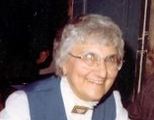
JOAN'S MATERNAL GRANDPARENTS

*************************************************************************

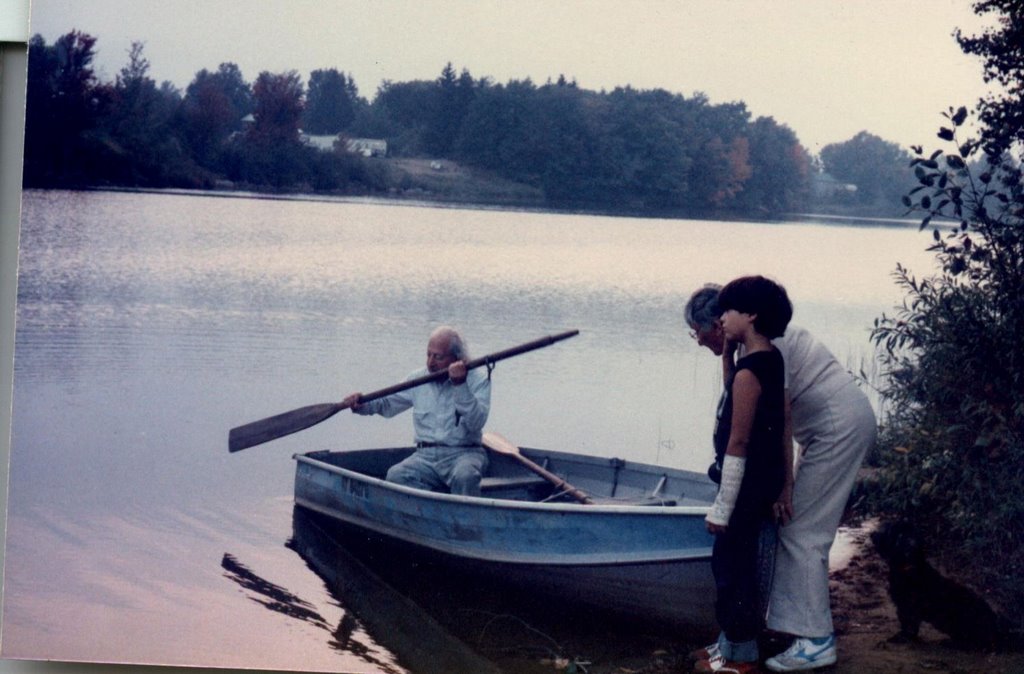
We called our Grandparents Omama and Opapa. When we first came to New York from Switzerland, we lived with them in their tiny Kew Gardens apartment. Later, sometime in the early fifties, they followed us from New York City to Parishville and lived throughout my childhood, in a little unpainted house on Catherine Street, just a few houses down from ours. The grass in front of it was high. I don't think it got mowed. Anyhow, it was a rental. They didn't expect to live long enough to bother buying. It was unpainted, because, again, why bother? But it had a marvelous garden in back. Our Opapa loved growing tomatoes. Not eating them, but growing them. And corn. I remember the corn... Inside, the house, in the living room, was a big cozy fireplace and oil paintings on the walls. One, I remember, was called the Blue Boy: A very handsome young man with pink cheeks, red lips, long black hair, all dressed in blue satin,. There was a staircase leading up to a couple of tiny rooms... bedroom, parlor... One door, I remember, had a brass knocker, a lion head with a ring in the nose. The lion head fascinated me.

DR. ARTHUR BRILL
Every Sunday we had Sunday lunch with the grandparents. That was the one day our grandfather cooked. Mostly I remember omeletsor kiesh or something like that. And, I remember sitting in front of the cozy fireplace enjoying the Sunday funnies while lunch was being prepared,our mother and grandmother setting the table. Summers our Uncle Bobby, his wife, Toni, and their two children, Peggy and David came up from New York and lived with them too. Every Sunday, after the family lunch, while the women cleaned up, our Opapa went up to his bed for a nap. After a while we were allowed to go up and bounce on his bed to wake him up. I loved those times climbing all over Opapa until he'd finally get up. I remember pretending we were horses in a pasture.

Another thing I remember about Opapa is that in town he was known as "Papa Brill" and he always carried lollipops in his pockets to give to the town kids. Also, in his later years, he was a terrible driver. His car, as I remember it, was an old Pontiac (Chevy?) Anyhow, it was green. Whenever we took trips together, we in our car, they in theirs, my mother would worry and panic, the old pontiac close in front of us, weaving all over the road.

Omama was very heavy, and she had to wear special shoes with holes in them to let in the air. She alsways had a cane, and wore dark dresses with white polka dots. And, I believe she was usually sad, sometimes bitter. Omama never learned to speak English very well, and I remember her speaking to me in German, and me answering in English. And, if I was sick, I remember her sitting by my bed telling me Viennese folk tales in German. I especially remember one about a goose who laid golden eggs. But they couldn't have been solid gold, because they were cracked open and stirred up into a wonderful bread-pudding sort of thing without the bread. It was called "Kaiser schmalz" and was the King's favorite dish. The way you make it is: Take 4 or so eggs, add a little milk, a few table-spoons of flour, a good deal of sugar, vanilla and raisins. Bake it in the oven for about 15 minutes. Then stir it up and let it cook another few minutes. Until it's solid. Something like that. The goose was rescued from slaughter again and again because the king needed his favorite dish.

(Article in the Watertown Daily Times, November 25, 1959

Austrian Masonic Leader of 1930's is Parishville Resident
by Louise E. Blake

Potsdam, Nov. 25— Arthur Brill, a man of unusual quiet and dignity and with a kindly twinkle in his eyes. reminisced yesterday of his former happy life as a lawyer in Vienna, Austria, and as a man especially active in free and accepted masonry, before the iron heel of Hitler destroyed everything worthwhile in that beautiful city of more than two million people, and he and his wife fled to America.

Now Dr. Brill and his wife have a cozy home in Parishville where they live on the same street with their only daughter and her family. It is a far cry from Vienna where terror reigned under the Nazi regime from which the couple luckily escaped with their lives. These memories the couple is trying to put behind them and forget. Their daughter is Mrs. Angela Thaler, wife of Dr. Max Thaler, who came from the old country to America where residents of Parishville were instrumental in establishing Dr. Thaler as resident doctor through an agency for displaced persons.

Dr. Brill may be considered famous in masonic circles, for he is the founder of several groups of young men from the ages of 16 through 22; young Masonic groups known as "dei kotto" meaning the chain. These young Masonic organizations were started by Dr. Brill in Vienna, Prague and other nearby cities and continued to be active until the reign of Hitler.

In relating the work of the founding of these organizations, Dr. Brill, former master of a masonic lodge in Vienna, said it was 1928, during a jubalee of the grand lodge held in that city that he... concerning the founding of an order of young men. He recalled that masons from all over the world attended the Jubilee, including many from the United States. The officers of the grand lodge attempted to establish a society for young masons, but were discouraged when they received little cooperation from the boys. Dr. Brill then received permission from the grand lodge officials to attempt to contact the youth groups and get them interested.

Dr. Brill was more successful when the young men found that they could have their own masonic order without having it under the jusisdiction of the grand lodge. As a result, about a 100 young men between 16 and 22 organized their own lodge, wrote their own bylaws and rituals with the assistance of Dr. Brill and held their meetins once weekly. "I only remained in the background to help when they needed me," Dr. Brill explained yesterday. A young man of 18 was the lodge's first president.

After the lodge was established, the grand lodge gave them a room in the grand lodge building for their meetings and assisted financially in many ways. These weekly meetings were for lectures and discussions. Then on each Sunday the lodge entertained the young girls as their guests with activities such as trips to the mountains and other out-of-door events.

Dr. Brill explained that in Austria a man must the age of 24 before he can become a member of the masonic order. The young lodge had a camp in Kristendorf where the girls were entertained on Sundays as their guests.

The newly organized lodges for young men visited each others' lodges once a year and also entertained their fathers, most of whom were master masons.

It was in March 1938 that Hitler came and destroyed all masonic lodges by taking all books and furniture from the buildings and burning them in the streets. "I was arrested for one day by the Gestapo," Dr. Brill recalled. After continuous questioning for ten hours he was allowed to go free.

Dr. Brill was a director of the immigration department and although he wished to leave with his wife, he was not allowed to go, as they claimed "he was indespensible." In May 1939 he was finally allowed to depart with his wife and the couple sailed from Italy to New York.

During the years in Vienna, after he founded the young men's lodges, he was called "Uncle Brill" by all the young men of the lodges as their term of affection for the man who had helped them so greatly.

Dr. Brill recounted one incident that might have meant death to him during the Gestapo. He said the Nazi officials had rounded up a large crowd of Jewish people in the main streets whom they were going to take to some unknown destination. An officer came after him and asked him if he was Jewish. Admitting that he was, the officer took him to the large group, when suddenly the Nazi officer said, "Are you Dr. Brill?" When the lawyer said that he was, the officer said to him, "You did some legal work for me a few weeks ago and would not take any pay for it. Now I am going to repay you. Come with me." The officer ordered the lawyer to walk directly back of him and led him out of the crowd to an isolated street. Here the officer set him free and left him.

After reaching America,Dr. and Mrs. Brill lived in New York where Dr. Brill worked at any job he could find for a few years. Then, after his son-in-law and daughter were sent to Parishville to live, they soon followed. There Dr. Brill worked as secretary (accountent) for his son-in-law.

Dr. Brill has a nephew, Mark Altman, who is Master of the Humanities F & A M of New York. a masonic lodge for members of former lodges in Austria. Mr. Altman and his family will spend Thanksgiving in Parishville with Dr. and Mrs. Brill and Dr. and Mrs. Thaler. It will be a truly Thanksgiving for a life of peace in our United States.

Dr. Arthur Brill May 14, 1881- April 3, 1964

Parishville man was Retired Lawyer — Rites Sunday

Watertown Times (?) or Potsdam Courier Freeman(?) Obituary April 4, 1964

Arthur Brill, 82, a retired lawyer of Parishville and a native of Vienna, Austria, died yesterday at his home. He had been in poor health recently.

The body will be at the Garner funeral home, Lawrence avenue, where friends may call.

A Masonic service will be held tonight at 8:40 p.m. at the funeral home with officers and members of Amber lodge F & A.M., Parishville officiating.

The funeral will be Sunday afternoon at 2pm at the funeral home with Rabbi David Kozak, Ogdensburg, officiating. Burial will be in Anshe Zopen cemetery, Ogdensburg.

Mr. Brill is survived by his wife, Mrs. Martha Brill, Parishville, one daughter, Mrs. Max (Angela Thaler, wife of Dr. Max Thaler, Parishville, a son Henry L. Brill, Long Island, a sister, Mrs. Thelophi Jawtt, Kew Gardens, New York City, and six grandchildren.

Mr. Brill was born May 14, 1881. He was graduated from the University of Vienna with a doctor of law degree. For years he conducted his own law firm in Vienna until 1939 when he and his family came to New York City. He was associated with a law firm in New York until he moved to Parishville several years ago. Since then he had been an active accountant until last year.

He had been especially active in the youth movement of the Masonic order, both in Vienna and in Parishville. He was a life member of the order and a member of Amber Lodge.

In World War I he served his country as Captain in the Austrian army. He was decorated several times. On June 30th 1912 he married Martha Bloch.

*************************************************************************

MARTHA (BLOCH) BRILL OBITUARY NORTH WOMAN DIES AT 87

Martha Bloch Brill, 87, of Parishville, widow of Dr. Arthur Brill, lawyer and accountant, died Thursday in Flushing Hospital where she was a patient one day.

She had been spending the winter with her son, Henry L. Brill. The funeral will be at Nichols Funeral Home at 2:30pm Sunday with Rabbi David Kozak officiating. Burial will be in Anshe Zopen cemetery, Ogdensburg. Surviving, besides her son, a daughter, Mrs. Max (Angela) Thaler and six grandchildren.

She was born February 22, 1892 in Vienna, Austria, daughter of Ludwig and Sophie Reiss Bloch, and was the last survivor of their three children. A brother and sister died in England years ago.

She was married to Dr. Arthur Brill May 2, 1919 in Vienna. They came to the U.S. in 1939. They came to Parishville in 1950. Dr. Brill died in 1964. Mrs. Brill was a membr of the Beth El Congregation, Potsdam.

Wednesday, January 4, 2017

Joan's Family Poems


My Mother Is Alive
(Written for my mother, Angela Brill Thaler, in 1984, soon after
a near fatal car crash)

Angela Thaler 1950's


MY MOTHER IS ALIVE

Some poets write
how their mothers are dead
who never really lived
anyway
except behind the ironing board
and in unfulfilled dreams --

Not me.
My mother is alive.

Floating on her back in blue water
she is monumental as mountains
on sky.

Other mothers drift
in white aprons
boneless as angels
in pitiful retrospect.

Not mine. Mine is rock hard.
Head on, two cars prove --
she is full of bones.
And a good deal of brain.
Swollen.
But -- thank God -- undamaged.

My mother sews like a factory.
Plays piano like an army.
Is a nurse, like a doctor.
A secretary, like the boss.

A lover of mushrooms
wild geese and waterfalls.
A connoisseur of North Country snow.

She can be a carpenter.
A seamstress. A politician.

My mother can knit an intricate sweater
& read a book at the same time.
Write a book. Design an afghan.

Organize a peace march.

At 72 she does JANE FONDA exercises
to keep herself strong.
And nobody beats her
in scrabble.

My mother speaks 5 languages
-- fluently --
And Latin.
And Greek.

In fall she climbs trees
to pick crabapples
And bakes them into stroodles
And boils them into fruit soup.

Or she's working in the Dr's office
and the patients want her advice
as well as his.
Or she's teaching German in the high school.
Or she's traveling to South America.

Summers she swims her favorite river
to the island & back. Every day.
The breast stroke. The crawl.
She is slick as an otter on her back.

Dreaming under summer's blue dome.

Dreaming in the night under stars.

Dreaming this hard morning
on a different river. Today my mother is hurt.
She is drifting in a drugged stupor
on a river of pain.

Her high forehead is bloated
like a rank summer melon & life
tastes bitter in her mouth.
She cannot eat.

Under hospital sheets
my mother's body lies limp;
pitiful as an angel.
Her bones are all broken,
eyes swollen shut.

In her ears a roaring
like a waterfall.
Distant music of pain strums
electric against her overstressed nerves.

In her teens in Vienna she played
the accordion.
Wrote verses to sing at weddings
& parties. And all the boys
liked her with her flashing
green eyes.

She smoked cigarettes
with the best of them.
And danced into the night.

My mother was no angel.
But she knew how to live.

And then Hitler came & all Vienna
turned sour in her throat.
All dreams became nightmare
& the nightmare was no dream.

But my mother lived.
Crossed borders by batting her eyes
at the guard.
Crawled under barbed wire.
Death followed and roared
& howled in her eardrums.
But she clung to her spirit
in the white dizzy Alps.
And though everything hurt
she lived.

It's a family joke
how when she was born
all swollen and dark
in her little white bed

an uncle, condescending,
said, "Don't worry that she's ugly.
Maybe she'll be smart."

They named her "Angelika,"
"Angel."
And she was wild as
Cochise in the movies --

painted her face
& called herself
"Quimbo the Indian."

And only her guardian spirit
kept her alive
through a bone-breaking
childhood.

But she was smart, Herr Death.
And she kept faith
in her guardian spirit --
who kept faith in her.

And as for you, Herr Death,
this time in your "car accident" uniform,
you hit her but missed her
again.

And this nightmare
which is no dream
also will end
in her favor.

Already the x-rays
are changing their minds.
Her broken bones are healing themselves
in your face.

My mother will swim again.
Walk again.
Command the piano.

She will argue philosophy
in 5 languages.
Slaughter us all at scrabble.
And hold her grandson
on her lap --

whispering together
as they do.

And as soon as her eyes
are open again
my mother will read this poem
that I wrote for her.

She will know in this world
how much I respect her.
And love her.

And thank God.
And thank her.
And thank her true guardian spirit.

That my mother --
my strong unrepeatable mother --
is no angel.
My mother is alive.


*MY MOTHER IS ALIVE appeared in WOMEN'S STRUGGLES, WOMEN'S VISIONS, EDITED BY CATHRYN HEISMAN, AUGUST 1992. I retain all rights.

****************************************************************************
DRIVING CROSS COUNTRY WITH ANDY AND DAY IN THE YEAR OF THE DROUGHT
by Joan Dobbie

Even now after so many years & many such trips &
so much loss I need to expound about that one
particular magnificent journey East. How I at age 42
swam my way over the breadth of America
in absolute harmony
with two 13 year old boys. My parents were still
both alive in those days & we were driving
to see them, but there was in those days
no hurry
so we hit every body of water between Oregon & New York State, and let me tell you
drought or no drought
there were plenty.

We swam in the Willamette before we left home
& we swam in the green Snake River the instant we hit
Idaho
& we drove up 5 miles of precarious cliffs
to swim in Angel Lake, Utah
& we swam in the Great Salt Lake
until Andy was crawling with shrimp
& we swam in the Horsetooth Reservoir
& we swam in the Boulder Reservoir
& we almost went tubing down Boulder Creek
& we hit at least 5 of the 10 thousand lakes
of Minnesota
& we spent half a day submerged in the huge dead
& therefore perfectly pure water of
Lake Superior & in Ontario Canada we swam
in the cooling
system of a nuclear reactor (by accident)
where the water was luxuriously warm
& in upstate New York I tell you
there are rivers & reservoirs
everywhere. We boated! We rafted! We walked
on the water-pipes. We enjoyed that water!

And the people--
that summer my mom & my dad still lived
in their house by the river, staring I think
at too many sunsets, but facing that sun
with such a magnificent vengeance! It was
the year of their 50th Wedding Anniversary &
they'd invited every relative between here & anywhere
on earth & God help the relative that didn't
show up. We celebrated night & day. We had a huge
50th Wedding Anniversary Wedding complete
with a rabbi flown in from Indiana,
150 Wedding guests, a many-tiered wedding cake,
a man with a video camera
& all the challa you could eat.

We said, Hitler, you ruined this couple's first
wedding
but this wedding no tyrant can touch! And no tyrant
did.
Not out loud. Not that year.
All the girls wore silk dresses.
And myself, I went off & got laid, exquisitely.
And Magda & Jonathan, they got pregnant again.
And the boys? Who cares what they did.
The air was ripe with bubbles.

Then driving back West we encountered
a rainbow
swimming in the mist of Niagara Falls,
a bear standing on his hind legs
by the roadside,
he looked like a boy in a bearsuit
& coming up over the mountains
we passed muledeer & eagles & marmots
& hovering over the buttes there were condors

& we chased girls in their fathers' red Fiats
at 100 miles an hour
& we slept in our favorite park of the dinosaurs,
where
we made sundials to the white of the moon.
We met a real skunk but who cares? He didn't stink.
& nowhere we went did it rain.

And we drove past huge herds of thin antelope
& we did not hit any rabbits
& we heard the coyotes howling
& we drove through a vast burning desert
immersed in the incense of sagebrush on fire--
& I said, Man, this is the best trip of my entire
life!
& Day said, I sure hope it's not the best trip
of my life, I'd hate it --
my best trip almost over -- & me just thirteen.

* This poem appeared in Fireweed, 1992. I retain all rights Copyright 1992 Joan Dobbie

****************************************************************************
LITTLE FISHIES SCOOPED OUT
OF THE OCEAN OF TIME

They’re the cutest little squirmy things
all slippery as fresh caught trout
& you so proud
(the way you carry them around.)

They smile & pout
& wet & poo -- it’s true!
They hold the future
in their bodies

& you

so careful not to drop. While
on the horizon, we granpies
& grannies, great
uncles & aunties,

slowly descend
in a pale orange glow
(fumbling the triggers
of our digital cameras.)

No reason to fuss.
It’s the way of the world.

But it’s you, busy mummies
& daddies (who never get to sleep)
Thank you for working so hard
to keep it all running.

I’m so glad
you learned how to cook.

Joan Dobbie
12/06/06

Our Lucie

DEAR FAMILY & FRIENDS

( Please correct me where I have my facts wrong, and make suggestions for additions, changes, etc.)
Photo by Ellie Beeler

When Lucie was young, she read the poem, The Song of the Shirt by Thomas Hood (in German translation) and was forever influenced.

When Communism was still rich with idealism, " she joined the Communist party, dreaming of universal equality. When Hitler came into power, she struggled against his Austrian takeover. Later, as a refugee, despite the bomb that wiped out their home, she embraced her new life in London.
Lucie was active in the struggle for Jewish reparations. She joined the anti-nuclear fight and was active in Amnesty International. She gave to many charities. She was on the governing board of the local elementary school. She was on the board of the housing complex in which she lived from the time of her beloved husband, Erwin's, death until her own.

On a personal level, she spent many hours helping the ill and the elderly. And a lifetime being daughter, wife and then  mother to her own two daughters and grandmother to her four grandsons. Not to mention, being a loving cousin to us, her cousin Angela's four children and later our children's children as well.

She picked damsons from a neighborhood damson tree. She donated to the neighborhood "Charity Stores." She adored her various Siamese cats. She knew all the answers to Britain's intellectual quiz shows. She was really good at scrabble too!

What I am trying to say is that she was throughout her long life politically active, an active community member, a traveler too, and such a very good person. She was intelligent, witty, a lover of music, a lover of art, a lover of family, and a lover of humanity.

In turn, we loved her. Lucie was our mother's cousin and close friend from childhood onward. From the time I was 18 until I was well into my 60s, every few years I would come to London to stay with her for a bit. Sometimes for a week, two weeks, once , along with my two then young children, for two months. Toward the end of her life, Lucie asked me to stop coming. Company had become too much of a strain.

So now, there are memories...


With her best friend, Dada
Photo by Ellie Beeler

Bianca

My Grandmother's Grandmother by Dawn Dobbie


My grandmother's name is Angela Brill Thaler. She was born November 30, 1913 in Vienna, Austria, where she lived until 1938. Because of Hitler, she and my grandfather, Max Thaler, escaped to Switzerland. They lived in Switzerland for ten years and had two children there, Ellen born in 1943 and Joan in 1946. Since they could not get permanent residency, they moved to the United States, and lived in New York City while Max got his internship in general medicine. In 1950 they moved to a small town in upstate New York, Parishville. Max opened a family practice and was the only doctor in three towns. They had two more children, David who was born in 1953 and Susanna, 1955. They lived happily in Parishville for thirty-nine years. Max Thaler died September 9, 1989.
**********************************************************************
After the funeral the family gathered around the kitchen table. People were reminiscing about the past. My grandmother, Angela, told a story from her childhood, about her grandmother, Sophia.

"The year was 1918, I was five years old, right at the end of the first world war. An epidemic of influenza had spread all over Vienna. My baby brother, Bobby, caught it, so my parents decided it would be best if I stayed with my Grandmother Sophia so I would not catch influenza.

I had never spent much time with my grandmother, let alone spent the whole night. She was a very distant woman; I had always admired my Grandmother Sophia. She was incredibly beautiful, and although she was a widow who always wore black, she dressed to the height of fashion. She had exquisite snow white curls piled high on her head, and she had the smallest wasp waist I had ever seen. There was a sophisticated air about her. She definitely was a lady.

I had a wonderful afternoon with her. She took me to the most expensive restaurant in the whole city. I had an extremely lavish meal, the best a five year old girl could dream of. The dessert was amazing, a chocolate mousse, with whipped cream piled high, in sweeping swirls just like my grandmother's beautiful hair.

After dinner we went to the opera, which was another new experience. I had never seen so many extravagant women! They were wearing beautiful furs and jewels. The

opera house was fragrant with exotic perfumes. I had never seen this world and it enchanted me. Of all the beautiful women there, my Grandmother Sophia was still the most beautiful. I was so proud to be there with her. She was the queen and I adored her.

We got home late, and we were both exhausted. I washed my face, brushed my teeth and put on my nightgown. Then I climbed into my grandmother's deluxe king size feather bed with its silken sheets. Grandmother Sophia came in and sat at her vanity table where she began to remove hairpins from her hair. She then removed her hair! She lifted off her beautiful white swirling locks and put them on the bureau. I was so shocked, I just sat there with my mouth open. I could not believe my grandmother's beautiful hair was not her hair. How could this be? All she had left were a few short gray hairs.

That was not the worst of it. Next she undressed; after her dress came off she unlaced her corset. I had never seen a corset before and as she unlaced it I saw her grow fatter by the second. When she was finished she put the bony contraption on the bureau next to her hair. She then washed her face and off came her eyebrows and rosy cheeks. At that point she barely resembled my grandmother, and I was getting quite frightened. She then removed her teeth and placed them in a glass jar on the bureau next to her hair and the corset.

Finally, a bald, fat, ugly, old woman, who I didn't even know, climbed in bed with me, and grinned a toothless grin. That was when I started screaming."

That's how Angela finished her story. It made me laugh hysterically, but it also made me feel very sorry for poor old Sophia.

As we sat around the table, I remembered that the five year old girl was my beloved grandmother. I also realized that I could be that five year old girl, but my grandmother's beauty was natural and I could never be afraid of her. I could only love her.

Written in 1989, Published in "Angela's Artwork" 2002
Copyright 1989 Dawn Fourie (nee Dobbie)


September 1989

This is a true story. This is what happened. But what she didn’t mention, but I remember, is this: There on the table was my grandmother, somehow magically disassembled, but my grandmother. And what came into bed with me was not my grandmother. A stranger came to bed with me. That’s why I started screaming— Angela 2001

Mom's Poetry

My mother, Angela Brill Thaler was something of a closet poet. I think she considered poetry writing somehow indecent, too personal to be proper. As a young woman in Vienna, and later in Switzerland, she belonged to a musical group. She played the accordion, wrote rhyming verses for weddings and so forth. But until late in her life, most of her serious poetry was written in private, and destroyed.

Thankfully, one poem she did not destroy. It was a poem written for me soon after my birth. I was her second daughter, born in January of 1946, when, finally, the war was truly over, and she could almost dare to hope. Almost, but not quite. She wrote the poem in German, and 24 years later, when my own daughter was born, she translated it into English as a gift for me. Click on the link to your right, Looking at my Baby, to read, or listen to my reading of, this beautiful poem.

And, I share with you here, several poems she wrote and was willing to share in the last couple of years of her life, when she was living in her own little 11th floor apartment overlooking the foothills of the rockies at Golden West Senior Residence, Boulder, Colorado:

To My Children
Who Give Me Continuity!--

by Angela Thaler

This is the course of all eternity:
to heavy plowing
not to happy harvest
is our time enough.
And if no other takes the road I took
The seedling withers
In forgotten field.
And like a wispy cloud
Up in the sky
So disappears an unimportant “I.”

•••••••••••••••••••••••••••••••••


The Smorgasbord Of Life

by Angela Thaler

Offers hot and cold, sweet and sour.
I ate my portion with relish—
And some indigestion.

We remember the past
With joy and sorrow—
We are alive today.
Never mind the tomorrow!
************************************
Untitled


by Angela Thaler

On the highway stream to Denver
Cars and cars, a steady flow.
Silently the mountains wonder:
Where did all the people go?

February 1999
****************************************************

Vorsicht Ist Die Mutter Der Weisheit
by Angela Thaler

“Caution is the mother of Wisdom”
A German proverb goes.
But who is the father of Wisdom?
Nobody knows!
It therefore is an obvious fact
That Mother Caution did neglect
Once or twice
Her own advice!

************************************************

At Golden West
by Angela Thaler

In my penthouse nest
At Golden West
The past and the present
Merge in happy harmony.
Birds fly by
Framed by sky and mountains.
I look down at the matchbox-cars
And the miniature people.
I am giant Gulliver watching
The Lilliputes!
The elevator brings me down
To their level
And I am one of them.

1999
****************************************************

Cogito Ergo Sum(I Think
Therefore I Am)
by Angela Thaler

My heart still beats.
My brain still thinks.
But my skin is wrinkled
And my hair is white.
If I don’t look in the mirror
I’m all right!

1999
****************************************************
A Little Fairy Tale
by Martha Brill and given to daughter Angelika on her thirteenth Birthday (Translated by Angela Brill Thaler)


A mother went to the woods by herself
And under a thorn bush found an elf.
“Don’t be frightened, little man!
You are free now—run if you can!”

“Dear Lady, three wishes I gratefully convey:
Speak up before I run away!”

The mother did not hesitate:
“That my child’s life be happy & great—
that her spirit remain pure & kind…

“Stop! You wasted two wishes.
Let the third be for yourself!” said the elf.

The mother pondered hard & long
And finally she did respond:

“For me, only one thing you can grant:
Please let my child become my friend!”

And This, my favorite of all her poems, was written for me, Joan, when I was newly born in January 1946


My lovely child, we watch you sleep,
I seek his hand, who gave your seed ...
You manifest of feverish lust in May,
we made a choice -- you have to pay.
Now here you are, beginning of a fate.
I ponder of its purpose,
I'm afraid.
So many bloods are in your stream,
so many flames to build the fuzzy dream
that glimmers dimly in your sense:
new element of countless elements.
What we admitted or suppressed,
the dark, the ugly, and the best
it all is you
or could be you.
The world we built in love and trust
is now in ruins, death and dust.
What if some day in desperation
you ask us justify creation?
The foolish, burning optimist
left you a world
which does not exist.
A judge you are to us, my pet.
You smile in dream ... don't know it yet.
A healer too of squabbling fuss,
because where we are two
you are the both of us.
And some day
I will smile within your face
and cry within your eyes.
And on your feet I'll walk upon my grave
and in your warmth I'll press
my body to your closest friend
to take the glorious gift of joy and dread:
a living child like you ... now sleep my pet ...

Poetry for the Palette!

When I was 20 years old, and a supervisor in a girl’s boarding school, all I knew about cooking was that somebody does it and we eat it. When I was 24, Max and I married and moved to Switzerland. There I found out that I had to be that somebody!—Angela Thaler

Rum Balls


Somebody in Switzerland told me how to make them.. You have to have some fun too, you can't always be miserable just because you are a refugee in a camp. I always used to say, "The Lord doesn't give us a bonus for the years we've spent in here. If we survive it, we're not going to get more years just because we were in camp. We might as well live while we can." And, we would kid each other.

Well, my first rum balls were a rum sausage! We were in the refugee camp, and, we had a friend, Emil Pearlmutter ( He was a very good guitar player. We always played music together.) who didn't have a chamber pot. (In those days, when you had an outhouse, a chamber pot was an essential. Especially if it was 20 or 30 below outside.)

So, a group of us put our money together and bought him a chamber pot, a beautiful chamber pot, and the ingredients for the rum balls. I made the dough (without the machine in those days) and, we made a sausage, a very natural looking sausage, and put it in the chamber pot. He was shocked for a moment! He didn't know what it is, whether it is real, or whether it is real! But anyhow, that was Emil's Chanukah present, a chamber pot with a brown sausage in it. And that was my first time making rum balls--.

Makes about 50

2-1/2 Cups crushed Vanilla Wafers (or other cake or cookie crumbs)
1 Cup crushed Pecans (or available nuts)
2 Tablespoons Cocoa
1 teaspoon maple syrup (if available)
1/2 Cup Rum
1 Cup Sugar for Dough
2 Cups Sugar for Rolling (Some may be left over for next batch!)


In food processor crush vanilla wafers (app.1 box) or other cake or cookie crumbs and measure 2-1/2 cups. Crush shelled pecans (or walnuts or...?). Measure 1 cup. Add 2 tablespoons Cocoa powder, 1 teaspoon maple syrup (if available) and 1 cup granulated sugar. Add 1/2 cup rum. Be generous with ingredients!!! Mix into dough with processor. Scoop out teaspoons of dough and roll into balls. Drop in bowl with 2 (or more) cups granulated or powdered sugar. Shake until sugar coats the balls. Refrigerate until time to enjoy.
****************************************************************************************
Spiegel Ei
(Mirror Egg)


My father used to say,” One pound of sirloin & one teaspoon spinach!" Something like that. He wasn't much of a vegetarian....

Serves 4

2-Bunches spinach
(app.) 4 Tablespoons white flour
4 Tablespoons butter (or margarine)
Salt, pepper & garlic powder or fresh garlic to taste
4 Eggs

Wash spinach & cut off roots (stems are okay). Steam or boil in small amount of water until limp & dark green. Make Roux: In saucepan melt butter over low heat. Add flower until pasty. Put roux & spinach into food processor & cream. Spoon creamed spinach onto plates. Place one sunny-side-up egg in the middle of each serving of spinach.

Enjoy!!!
****************************************************************************************

Das Bubchen auf dem Eise
(Little Boy on the Ice)

Serves 2

Cream of Wheat
Milk
Butter (or margarine)
Sugar
Chocolate bar

Prepare Cream of Wheat with milk according to directions. ( 2-1/2 cups milk to 1/3 cup cream of wheat.) Heat the milk almost to boiling, then slowly stir in the cream of wheat.) When it has thickened, pour onto a flat dinner plates, stir in sugar and butter to taste, and place a nice chunk of chocolate in the center.

****************************************************************************************
Palatschinken
(Crepes or Blintzes)

Milk
Eggs
White flour
Butter (or margarine)
A flat frying Pan

In a blender mix one egg for each cup of milk and add flour to a creamy (not too thick) texture. Pour onto center of large flat, hot buttered frying pan. Lift pan off heat as you swirl the dough into a thin film that covers the pan. Lower heat and fry one side till golden brown then flip over. Roll up with jam, fruit, plain sugar, or even savory filling like cheese or vegetables, or, fill with the following for Topfen Palatschinken:

1 lb Cottage Cheese (for 4 Palatschinken)
1 egg yolk (you can add the white to the batter)
Raisins
Sugar

Mix to taste and roll up.

****************************************************************************************

Apfel Im Schlafrock
(Apples in Dressing Gowns)

I remember I was so disappointed when one of you, I don’t remember which one, said to me, “You don’t cook American.”

Milk
Eggs
White flour
White sugar
Butter (or margarine)
2 large apples
A frying Pan
Paper Towels

As in Palatschinken, in a blender mix one egg for each cup of milk and add flour. But now you need more flour, for a thicker texture. Peel and core apples, then slice into thick, even slices. Pour a cup of sugar onto a flat plate. Dip the slices in the batter. Melt a good chunk of butter into a hot frying pan, then turn down and fry battered apples over low to medium heat. Remove when golden brown, pat off grease on paper towel and coat with sugar .
Gnocci (Nockerl)
(Small dumplings)

Milk
Eggs
White flour
Butter (or margarine)

Make dough as for Palatschinken, but add more flour to thicken until it is very gooey. Drop by spoonfuls into boiling water. Boil until they float. Scoop them out and immerse in melted butter!

****************************************************************************************

Eier-nokerl und Salad

In a frying pan scramble nockerl with an egg or two. Eat with a green salad!

****************************************************************************************


Topfen Kipferl
(Cottage Cheese Pockets)


3 cups Flour
1 lb. Butter (or margarine)
1 lb. Cottage cheese

Apricot (or other) Marmalade

Knead the first three ingredients into a dough, roll out thin a with rolling pin, and use a glass to cut out circles. Put a dab of marmalade in the center of each circle, fold in half and pinch closed. Bake until golden brown at 350 degrees.

****************************************************************************************

Viennese Karfiol (Cauliflower)

The interesting thing about Viennese cooking is that everything you do adds calories, not like in America, where everyone is trying to lose weight!

1 whole Cauliflower
Butter (or margarine)
Breadcrumbs
Sugar

Wash whole cauliflower, put in a pot of water, cover and boil until soft to a fork (about 20 minutes). Remove from water, but save the water for soup. (It adds flavor.) In a separate pan melt a large chunk of butter. Add enough breadcrumbs to cover the cauliflower and fry until the breadcrumbs are saturated with butter and slightly toasted. Spoon the toasted breadcrumbs over the cauliflower. Sprinkle with sugar to taste. (This can be done separately for each serving.)

****************************************************************************************

Viennese Fisolen (Greenbeans)

Greenbeans
Butter (or margarine)
Breadcrumbs
Sugar

Wash beans and snap off ends. Either boil or steam until tender. Prepare breadcrumbs and sugar as for cauliflower (above). Sprinkle with sugar to taste.

****************************************************************************************

Kartofel (Erdapfel) Knodel
(Potato Dumplings)

Mashed potatoes (4 cups)
White flour
Egg
Butter or oil

Mix mashed potatoes with flour, egg and a dash of oil until a light, workable dough is formed. Roll into a long tube, and then cut into appx. 1 inch chunks & roll into balls. Drop into boiling water; boil until dumplings float. Melt about a 1/4 inch of butter into a glass baking dish. Roll dumplings in butter & keep in a warm oven until served.

****************************************************************************************

Zwetchgen Knodel
(Plum Dumplings)

Any guests would have to pronounce them in order to eat them!

Potato dough (See above)
12 Small dark plums
Sugar cubes
Butter (or margarine)
Breadcrumbs
Granulated white sugar

Prepare potato dough as for dumplings. Remove pits from plums & set aside. Stuff each plum with a sugar cube & wrap with potato dough. For the “Old Maid” wrap pits in dough too! Drop into boiling water & cook until floating. Remove from water, rub with butter & roll in breadcrumbs.

****************************************************************************************

Gleichgewicht-Kuchen
(Same Weight Cake)

3 eggs, weighed
Same weight butter (or margarine)
Same weight sugar
Same weight flour & 1 tsp. baking powder

Beat butter & sugar well, add alternately: eggs & flour. Put in shallow square baking pan, cover closely with apple or other fruit slices. Bake in medium oven.

****************************************************************************************

Nudels (Noodles)

6 Cups Flour
1 Egg
Water

In a large bowl pile the flour into a cone or mountain shape. Punch a crater in the top of the mountain and crack the egg into it. Add enough water to make a workable dough. Roll very thin and slice to shape. Noodles can be dried and saved for later or cooked immediately. For ravioli or piroghi, punch circles out of dough with a cup or glass, stuff, and pinch closed into pockets.

****************************************************************************************

Apfel Strudel
(Apple Strudel)


6 tart Apples
1 lb. Raisins
1 cup Sugar
Butter (or margarine)
Filo dough
Cinnamon
Bread crumbs

A sheet or table cloth to work on
A Cookie sheet

In the old days we had to make the dough by hand. It was a terrible ordeal, spreading dough paper thin over the entire kitchen table. And it had to be done quickly, before it hardened. Thank heaven for Filo dough!!!

Thaw filo dough overnight. Set aside. Slice apples thin and mix with raisins, cinnamon, sugar etc.*

Lay out two to three layers of filo dough onto sheet or table cloth, brush with melted butter and sprinkle with bread crumbs. Spoon one layer of apple mixture onto dough, then add about three more layers of filo dough, again brush with butter, and again spoon on apple mixture. Continue until apple mixture is gone, then roll filo dough/ apple mixture into a sausage and roll the whole business onto a greased cookie sheet. Bake at 350 degrees until golden brown and bubbling juice.

*The best recipe, as my mother always used to say, is simply this: “Put good things in, and good things will come out.” You can add nuts, figs, some lemon juice... whatever... to the mixture.

****************************************************************************************

Compote
(Fruit Soup)

Apples or peaches or...?
Raisins
Sugar
Water

To peel fruit, drop into boiling water, then scoop out and peel under cold running water. The skin slips right off. Slice fruit into cooking pot, add raisins and sugar to taste. Bring to a boil and simmer until the fruit is soft but not mushy.
****************************************************************************************

Angela Brill Thaler interviewed by Lou Greenblatt


My Life Story*
By Angela Thaler as told to Lou Greenblatt (1973)
and Joan Dobbie (1997 & 2001)


I was born Angelika Henrietta Brill on November 30, 1913, in Vienna, Austria. My father was a prominent lawyer, my mother, one of the first female graduates of Vienna University. I have one brother, Heinrich ("Bobby") born 1917. My parents were Jewish, but very assimilated. That we were Jewish was rarely mentioned, maybe by my grandparents while they were alive, but otherwise I didn't have much contact with it.

I spoke fluent French because I had a French governess. I played piano. I went to a humanistic secondary school where I studied Greek, Latin, and all sorts of other "very useful things...." When I was about 16 though, in high school, I joined WIZO (Women's International Zionist Organization) where I learned some Hebrew and got a little bit caught up on my Jewish background.

After high school I decided, partly because I was a member of WIZO and wanted to eventually emigrate to Israel, that something more down to earth would make sense and instead of going directly to the University I went for 2 years to the Academy for Designing and Dressmaking. I later became a language teacher.

I met my husband, Max Thaler, then a young physician, at a lecture in the "Urania" (planetarium, science, art center) in 1934. What attracted me to him first was that he was so completely different from all my other boyfriends (and I had plenty of them). He was from a strictly orthodox home. And whatever he did and said and thought, was to me like coming from China or Tibet or some other very strange place I never heard of before. He wrote beautiful, touching poems and talked for hours of his theories in medical research. He had a sincere purity that contrasted sharply with the wisecracking cynicism of my crowd. And, we had two things in common: love for the opera and for the Viennese woods.

We started going together against the will of his whole orthodox family who considered me as something very, very frivolous. I smoked cigarettes, I didn't even know what Kosher was... I was just not right. But we stayed together and gradually interest turned into deep commitment for both of us.

In March 1938 our world caved in. Hitler and his Stormtroops fulfilled the wish of many Austrians in a bloodless coup, the "Anschluss" of Austria to Germany. Jewish citizenship was annulled. All Jewish businesses were closed, bank accounts confiscated... homes invaded and everything desirable taken or destroyed. I remember them burning "enemy" books in our (my parents') home, i.e. Tolstoy, Heine, Dickens, etc. and confiscating my mother's cookbook, written in shorthand, as proof of spy activities..."

The moment the tumult started was the end of all objections and petty quarreling. Because if you're not married you're bound not to have the same passport... and even if you do escape, the bureaucracy will tear you apart. (We did not yet realize that no passports were given to Jews. )We were married on June 8 in the basement of the synagogue along with seven or eight other couples.

On November 8, 1938 the Nazis began moving in for the kill, the final solution to the "Judenproblem." All males were rounded up and transported to concentration death camps. (Women and children were taken the year after.) My father escaped from the local gathering point when a former client, now in Nazi uniform, guided him through a back alley. On November 11, my husband, Max, was found in a laundry hamper in our bathroom and taken. I must have followed them when they took him because I brought him home three hours later. How I managed to get him out I honestly can't remember..

The next day we bribed a train attendant and stowed away to the Swiss border. It took us over eight days to get across the half mile border. There were guns, bloodhounds, there was the Rhine River to cross... We had all kinds of adventures worthy of a John Wayne movie... but finally we were in Switzerland and permitted to stay. (Many refugees were sent back by the Swiss authorities to their death.)

We were assigned to the orthodox refugee camp in Degersheim, Canton St. Gallen. Max was put in charge of health care for this and 2 other nearby camps and I was to help establish and teach a school for the camp's children. Because of these (unpaid) jobs we were "super-refugees" and had an apartment of our own, together with Max's brother and sister who had also made it across to Switzerland.

In the orthodox camp, I got what would have made my in-laws very happy if they would have survived Hitler. I learned Yiddish songs. I learned to cook kosher. I even taught Hebrew School! But for the first year, at least until I wised up, I was used as the Shabbas Goyta! On Saturday everybody came to my house for a cup of tea. And, I cooked a cup of tea innocently and was pleased about all the company I had! So, they played tricks on me. But I learned, and we got along very well and we liked each other. And later on, the next few years, I was more than the Shabbas goyta. Because one of the hardest parts of being in a refugee camp is the idleness, that you don't know what to do with yourself. And, I was always organizing games and theatre plays and teaching school and keeping the people as busy as I could. We had in our camp former trapeze artists, university professors, former rich bankers, an old rag dealer from the ghetto.. people from all walks of life all thrown together. It was hard to find a common denominator. And, there were unhappy times, and happy times, exciting times and boring times... ten years of life.

And, those ten years gave us three children: Max's niece, 9 year old Blanka Kanczucker, who was found in 1942 wandering the streets of Milano, Italy, and shipped to our care by the Red Cross, Elfrieda Agathe, who later became "Ellen" (born 1943) and Joan Adele (born 1946). And they gave us also a love for the simple life in the country. A love for the mountains, the glaciers, the meadows...

How is it that Max and I survived when so many others died? I firmly believe a Guardian Angel watched over us! Who knows, maybe in the remote, far distant future one of our descendants is destined for some divine purpose? And, not only did we survive, but both my parents and my only brother survived...

My parents had gone to the United States in 1939, and my brother joined them in 1940. Our aim, all those years, was to come to the United States and join my family. This was not only because we missed them, but because there was a law in Switzerland that every would-be emigré had to prove every year that he or she was doing everything possible to emigrate. Which we did. But it took until 1948 before we were finally granted permission. Blanka, whose parents had also survived, had to wait one more year.

We crossed over on the Queen Elizabeth. If you ask me about the Queen Elizabeth, I can tell you they had beautiful bathrooms.... In Switzerland we had an outhouse with a big hole in the middle. And here I was on the Queen Elizabeth with a two year old and a four year old who were fascinated with the whole Atlantic Ocean rushing through the ship's toilet. So when everybody else rushed up to see the Statue of Liberty, I was down below, admiring the flush toilet of the Queen Elizabeth. We arrived on February 22, 1948 --my mother's birthday! -- and a public holiday: Washington's birthday. (As my mother's name was Martha, I felt very patriotic from the beginning.) I didn't see the Statue of Liberty until almost two years later.

We stayed nearly two years in my parents' tiny Kew Gardens apartment while Max worked as intern and prepared for his state board as MD. He worked 36 hours straight and then came home to sleep for 12 hours. (I didn't see much of him but I heard him snore frequently.) And, it wasn't easy. But my whole family supported us.. (I don't mean financially, the Committee for the Resettlement of Foreign Physicians and the Hebrew Immigrant Aid Society, HIAS, gave us the necessities) but, they encouraged us. An aunt,
for example, gave Max the key to her apartment so that he could study because in our tiny place, with the two children, he certainly couldn't get one word straight..

By 1950 Max had passed his exams and we had learned to speak English. Now we were ready to start our new life. We settled (along with my parents who rented a house down the street) in Parishville, a small northern New York hamlet in the foothills of the Adirondacks, just south of the Canadian border. Max opened his medical practice, working day and night as country physician and as staff member in the nearby Potsdam Hospital. At first I taught German in the local high school, but then I took a degree as Medical Assistant and joined him in the office. For 39 years we served 5 villages in a vast rural area. TV's "Northern Exposure" reminds me of our early years in the North Country.

In the beginning, we were the only Jewish family in town, and I must say we never encountered antisemitism of any kind. Gradually times changed. The colleges and universities of neighboring Potsdam and Canton expanded. More Jews came into the area. A synagogue came into existence: Beth El in Potsdam, New York.

In September 1953 our son, David, was born. In March of '55 we had a third daughter, Susanna. We lived in a century-old New England style house with a back yard that led past raspberry bushes and swing set down to the St. Regis river. Our home was usually swarming with children, ours and their friends, then our grandchildren, and their friends.

In 1980 Max retired as Parishville School Physician and we were presented with a plaque of thanks for our 30 years of service to the town of Parishville. In 1988 we celebrated our 50th wedding anniversary with a huge family reunion and a real wedding this time, with over a hundred guests and three days of joyful celebration.

On September 9, 1989 Max's heart failed. His body lies in the Jewish cemetery in Ogdensburg New York, next to the graves of my parents. Thus ended 55 years of strong, loving and mostly happy togetherness.

In January 1990 I opened the next chapter of my life. After daughter, Susanna, her husband, Bruce, their one year old daughter, Lauren, and I journeyed to Bali together, I came to live with them (and later, son, Kirk) here in Boulder. (My granddaughter, Dawn, also was living in Boulder at that time.)

In 1997, after nearly a decade of sharing the Drogsvold’s home and family, I decided it was time to move on once again, this time into my own space. I discovered Golden West and put in my application. In 1999 I moved into my beloved Penthouse apartment!

In May 2001 I was diagnosed with “terminal” cancer. The love and friendship of my 4 children, my near-children, my son-in-law, my brother, my cousin, my 7 grandchildren and my dear friend, Irving, are my joy and strength in the time left to me.

August 2001

*A version of this life story appeared in "Life Stories of the Old and Young,1997" and this later version appeared in "Angela's Artwork", 2002.

Interview of Dr. Max Thaler by his son David Thaler

by David Thaler, circa 1973

My father was born in a small town near the border of Poland and Russia. Although it was inside Poland, the town’s name was Russian-- Magierov. The border area was disputed and often changed nationality. (At that time it was part of the Austria-Hungarian Empire.) Partly because it was near the border, there was a large police presence in the town.

In the central area of the town was the Jewish district. The language of the Jews was Yiddish. Polish speaking Christians lived in a concentric circle around the Jewish circle. Around the whole town were fields.

Some of the Jews were farmers -- small farms -- maybe an acre, a cow or two. Many of the Jews were shop keepers. My father’s family were taylors.; they made and sold clothing. It was a family of about eight, described by my father as a large family. He remembers a baby dying when he was 3 years old. Also, when he was about three, my father nearly drowned. He fell into the water upstream of a paddle wheel. He yelled and was scared. Someone rescued him.

My father’s father bought the materials for the shop, but was not much involved in the day to day operations or the actual sewing of clothes. The busines was mostly run by my father’s mother. My grandfather was a Talmudic scholar. A community of about twenty such men gathered daily in the synagogue.

There was another synagogue, an older one which was still there, although a new one had been built. Upstairs it was not much, just a single meeting room. It had a large underground basement with walls two meters thick. The older synagogue was used when there was fear of pogram.*

In his third year, my father began religious training. He didn’t like getting out of bed early, especially in the winter when it was still dark outside. Once, or maybe for a short period, he hid under his bed to avoid going to school. He was dragged out anyway by a man with a special name and position who was just under the rabbi in authority. By age five my father had read and pondered the Old Testament, in Hebrew. My young father saw war coming and saw its effects on his world.

The Jewish community was intellectually, not physically, oriented. It seems they had little understanding of the military mindset, of planned violence. They kept no guns. As war approached, Jewish youth were subject to conscription. They feared it greatly. In the military they would not be easily able to practice their religion because other soldiers would mock them. Also, because they had lacked exercise, play, and a physical orientation in their upbringing, the Jewish youths were frankly clumsy. They feared mockery because they were shy, and they feared death because they were clumsy. My father knew of some youths who crippled themselves to the extent of cutting off a hand or fingers in order to avoid conscription. Others injected turpentine in order to cause fever and absesses.

When my father was five and a half, the war was happening... World War I. The Russians were advancing. There were at that time pograms occuring in Russia, but not in Poland. My father’s family gathered themselves into a horsedrawn carriage and headed down a dirt road toward a town about 20 miles further from the border city of Lwow. About halfway there they stopped at the house of some relatives and my father played with two children, one of whom was about his own age. They had many toys, which my father loved. Rather than go on, he wanted to stay and play with the beautiful toys. Two he remembered seventy years later: a wooden rocking horse and a wooden toy gun.

They went on to the next town. The Russians were still coming. The family caught the last civilian train to Vienna. This train could only travel slowly and in daylight. The trip to Vienna usually took 24 hours, but this journey lasted four days. The train was shot at. My father remembered bombs being dropped from balloons. They dropped all around, missing the train. The train was crowded. Children-- my father -- slept under the seats. Sometimes there was no food.

In Krakow, about halfway to Vienna, the train stopped, and the Jewish community brought milk, bread and other food. For my young father, this traveling was exciting, an adventure, and not at all traumatic. Another time the train stopped and visited with a train going the other way. That train was filled with soldiers going to the front. The soldiers gave the refugees food and were kind to the children.

My father was fascinated by his first sights of Vienna’s tall buildings and glittering signs. His mother tried to prevent it, but soon my five year old father was wandering alone in the streets of Vienna... down the steps by the river... At first he was excited, perhaps ecstatic in his freedom. Then two things happened, I’m not sure in which order: he was abused by a group of children his own age, and he realized he was lost. He had wanted to play with the children, but they threw stones at him because they were culturally biased. My father had braids in front of his ears, wore ethnic clothing, and spoke another language. His mother had reported his disappearance to the police.After about 2 hours of aimless, probably desparate and tearful wandering, he was found by the police and returned home.

He was emotionally traumatized by this experience. Though he had always been clean, he began bedwetting. Every day his mother took him to a new physician. Their verdict was unanimous; he had no physical problem. He was bedwetting in reaction to what he had experienced. My father woke up crying, having dreamt what was true. After 2 or 3 weeks he got over the severe depression and bedwetting.

In school, he was in a mixed class of Yiddish and German speakers, though classes were taught in German. He knew only Yiddish. A teacher took a kind interest in him, so every day after regular classes he got an extra hour of German tutoring. He learned the German language in 2 or 3 months and soon was among the better students in his class. He was shy, self contained and studious. He never did play sports with the other children.

Over the next ten years, as he grew, studying was the main focus of his life. He read Schiller, Goethe ( Faust parts I and II ) most of the German philosophers and poets. He wrote many poems. A book of over 100 poems was finished. He had hopes of making it as a poet. Few people ever saw his poems. Occasionally a teacher would read one of them aloud to the class with the comment that it was very beautiful. He never actively tried to get his book published. He was not a part of the literary cafe life occurring in Vienna. He was too shy. All except 2 or 3 or those poems were subsequently lost. These poems, in German, exist today. I haven’t seen them.

When he entered the University of Vienna medical school he gave up plans to become a known poet. While a medical student, he continued to live at home, continued to be shy, especially with women, and continued to study very hard.

In medical school he had an original idea which took into account a philosophical generalization of some power, on anatomical observation, and on experience of emotional conciousness:

The generalization: Nature does not divide structure without dividing function.

The anatomical observation: The tear gland of humans is composed of 2 anatomically distinct portions.

The experience: When humans cry, we feel much better afterwards.


He proposed that at the same time tears are flowing outward, another chemical, from the other part of the gland, is being internally secreted. A tear gland may be 2 glands in the endocrine system sense of the word, as are the pancreas and the pituitary. He proposed that either or both tears and the postulated internally secreted chemical possess mood altering qualities.

He wrote up his theory and proposed experiments such as injecting tears and the dissected tear glands of corpses. My father submitted a paper to the patent office in Vienna where under law it was dated and kept on file for 30 years. That was in 1936. This work ended with Hitler and has never been resumed.

During this time of his fascination with tears, my shy father met my mother. They were introduced by a mutual friend....


*Dear Father,

Here is the story you told me written out to the best of my ability. Please check it over carefully for mistakes. Also expand on it if it brings anything else to mind. I would like to continue on this project, would you?

Perhaps you could speak into a tape recorder and mail me the tape. I’ll mail you what I write which you should go over and change in any way you like. Incidentally, would you considedr undergoing hypnosis in order to try to recover some of the poems which you wrote?

Please write and mail me a tape starting with your later years.

Dr. Thaler's Poetry

My father, Dr. Max Thaler, had been a poet in his youth, and once dreamed of becoming a known poet. But, with the Nazis, his manuscripts were lost, and his language was lost, and very few poems came to light in his later years. Of those poems he wrote & shared in my lifetime, ONE DAY was his favorite, and even at one time was put to music by one of his patients. Beyond that, there were a very few poems written for our mom for special occasions.

Joan Dobbie

The St. Regis River flowed behind our family home, and my father spent his most precious hours out in the boat, rowing, or guiding his small motorboat between lilly pads & rocks. In this poem he describes one day in his life as small town general practitioner.


Max, Angela and Andy 1985


ONE DAY
by Dr. Max Thaler

The sun appeared on the sky
red and fiery
making the clouds aglow
high and low.
The day of work began.
I heard the cry
of a newborn child.
The voice was astounding
and wild.
The mother smiled
her voice was mild:
This is my desire
this is my child --
Then came the old man
with pain in his heart --
His children and his wife
around him prayed:
Gracious God,
don't take us apart!
I came home.
My wife and I
went on the river:
The sky and the trees
above and below
and the water in the middle.
The reality and the reflections
you can't tell them apart
both forming a unifying miracle.

The sun is setting.
The clouds are forming splendid visions.
The hands of the Lord appear on the sky,
the fingers spread apart,
blessing the parting day
and greeting the coming night.

And it was morning
and it was night:
One day

1973


TWO POEMS WRITTEN TO WIFE ANGELA


To Angela, My Wife, For Mother’s Day 1963
by Dr. Max Thaler

I was alone!
Alone with a dream and desire!
Then I met you—
And you ignited the fire!
It heated and melted and bonded together
Our bodies and souls
For ever and ever.
The dreams and desires
Grew bolder and stronger—
They turned into lives—
They were dreams no longer.
Three beautiful girls
And David, our son—
The death threat is gone
And life will go on!
For present and future
Dear Liky, my wife,
With all our loved ones
A happy and purposeful life!

May 12, 1963


My Dear Liky!
(Written for the Occasion of their 50th Wedding Anniversary)
by Dr. Max Thaler

Aeons ago we were a perfect whole.
And when I was born
I got forlorn
My entire desire of mind
Was to look for each other to find
And to be a perfect whole again.
I became father.
And you became mother.
From just two we became
Three, four, five and six.
And we stick together
For ever and ever.
Even Hitler and all his devils
Couldn’t split us apart.
Never! Never!
And we stick together
For ever and ever
Max & Liky

1988

Lou Greenblatt interview Max Thaler 1973

Louis Greenblatt interviews Dr. Max Thaler on Thursday, December 6, 1973. 8pm.

I'm Dr. Max Thaler. I was born in a small town in Poland. The name of it was Magierov. I don't know whether this town still exists. It was half destroyed in the first world war and probably completely destroyed in the second. Anyway, it was a small Jewish stetle and that stetle was where we lived. There were about 500 Jews in the center of town. The surrounding area were more farmers. The Jewish people in this town were mostly store keepers.. They had stores, and they went to surrounding towns and sold their merchandise.

We had a small store in the center of the town, mostly clothing. I remember once when I was about 4 or 5 years old, there was a fire in this stetle. It was about 3 o'clock at night. Everybody was awakened and had to leave town. And they were away almost all night. (This was around 1913, about a year before the first world war.) Then when we came back into the town, half of the town was burned down. And the stores that were left were mostly robbed and plundered...

And around the same time, I remember I saw a car coming to our town. And the whole town was up to see that miracle (laughs) The car got stuck in the muddy road (there wasn't a paved road) and they had to come with two oxen to pull out the car.

In this stetle, there were three or four circles of houses. In the center there was a Catholic church and a Greek Roman church. And then there was a police station, and a grade school. There was a physician in town, and he had the pharmacy, there was no pharmacy by itself... the physician dispensed the drugs. There was no pharmacy in town.

I can remember, it was one morning, the whole town was assembled and awful excited and the news came that the First World War broke out. Everybody was afraid that the Russians will be there in no time because it was on the border not too far from there, the Russian border. And, most of the Jews took all their belongings, what they could carry, and tried to go to a bigger town. The next bigger town was Anaruska Lemberg (?) and my parents... my father stayed in town, left behind, he wanted to take care of our belongings... We had two houses there, and so he just couldn't leave.

And, my mother, with the family, me and my brothers and sisters, went to Lemberg. We stayed in Lemberg about 8 days, and the war was very bad... The Russians invaded the area where we lived and we barely could escape by the last train from Lemberg to Vienna. The train ride normally from Lemberg to Vienna took about 24 hours. At that time it took us 3 days to get there there, by the last train, because there were military trains all the time. So our train had to wait. The military trains had preference. I remember the train was awful crowded, we hardly had anything to eat. At several stations we got water and food from the soldiers who drove by, they gave us food, otherwise we may have starved. I remember the train was so crowded we didn't have any seats, we were all on the floor, and most of the people were standing. On one occasion it was night and we had to stop, and all the lights were turned off, because a Russian plane — it was the first plane I had ever seen — flew over and we wee afraid we were going to be bombed or something. I think, I can't remember which city it was, maybe it was Krakow, I think it was Krakow, where that happened..

Well, we arrived in Vienna. First we moved to... I think we had some relatives in Vienna, before we moved there, we stayed in their apartment. And we got some pension from the Austrian government because our merchandise was taken away by the military for their use, and we got receipts... and when we came to Vienna we showed them to the authorities, and they paid us monthly a special amount so we could live on it. That was going on for two or three years.That was a great help because we were small children and my mother couldn't go to work and leave the children alone. After two or three years, gradually, our older sisters would get some work.

During the whole war in Vienna we didn't hear anything from our father. Galicia was occupied by the Russians. The first time we could hear from our father was three or four months after the end of the war, that was the First World War. And my father wrote us that there was no way for us to come back because the town was almost destroyed and there was no way to make a living there. So, he came to Vienna and we stayed in Vienna until Hitler came.

In Vienna, I studied medicine. It took me about five years to study in the University of Vienna. In 1934 I finished my studies and in 1935 I graduated and I got my Doctor diploma. After graduation I was for about 3 or 4 year in different hospitals where I worked. I worked with ... Hans Hoff ... was a neurologist and a psychiatrist. I was there for two years. I intended firs to specialize in neurology and psychiatry, but later on... in Vienna at that time, there was no way for a Jew to get ahead, so I gave that up and just tried to improve my knowledge in general medicine so I could become a general practitioner. So worked in Winer (?) Krankenhaus — that was a big hospital in.. Fierednbezig (?) for a year in internal medicine, one year in surgery... After a year I worked in obstetrics and gyocology. And then in Algemeines Krankenhaus I worked all year in dermatology.

In 1938 Hitler came to Vienna and we had to try to get away, but it wasn't so easy. In November, I think it was the 12th of November, there was a general pogram in Germany and Vienna, and I was arrested (most of the Jews were arrested and most of them were transported to concentration camps, from Vienna at that time, mostly to Dachau.) My wife was able to get me out before I was sent away from Vienna, and about a week later we escaped to Switzerland.

(How did we escape?) My brother, who was arrested by police, was arrested for 2 months, ws released with the condition to leave the country within 8 days and there was... you couldn't get a passport and you couldn't get a visa to get away.. so he had to try just to go without a passport and without a visa. And, we had friends in Switzerland, and they told us there were certain areas where you can enter Switzerland without being molested by the custom officers. You can hide away and so on. And that's what he did. And, about a week later he wrote us the way that he went and we did the same thing.

I went with my wife and we stayed in a small border town... and we stayed there three or four days, and every night, because we had to go at night, you know at daytime you couldn't go... The border was a small river, the old Rhine... That was in December. It was not frozen yet. And the water was at that time quite shallow, so we could wade through. There was of course a big bridge that goes to police stations that we had to avoid. We had to wade through the river. We went every night, four, five, six times. Every time we went there, we got caught. Either from the German police or the Swiss police. They had blood hounds, of course, and the blood hounds found out easily...

One night I went through... of course it was dark... and I fell over something. It was a dung heap.(Laughs) I probably smelled so badly the bloodhounds lost the scent. And I escaped that way. I was hiding in a barn. In the morning I could see on the sight of the town, that it was already Switzerland and I called up my brother and then they notified the immigration office, the Jewish...?... in St Galen. They already knew about me through my brother. And they needed a doctor, and I was employed to take care of St Gallen and surroundings. I had an office in St. Gallen, with office hours in the fornoon and in the afternoon and patients came, and I took care of them. And then I had to go on home calls. I didn't have a car so I went by train. I also went by train to the surrounding small towns.

First we lived in a small town. My family and I lived in Degersheim, it's a small town about ten miles outside of St. Gallen and I went by train every day to St. Gallen. I had in a way a better position than the other immigrants because I was employed. I got a salary. And I had more freedom of movement because the Swiss authorities kept the immigrants confined, like in a camp, they were not allowed to leave that camp without permission. They couldn't leave the town unless they had a special reason and they got permission to go there. But I had permission to go to anyplace because of the profession. So I had a great advantage in that way.

So, we stayed in Switzerland for ten years. We tried to come to the states. We applied for a visa of course, but it was impossible to get for all kinds of reasons. And of course when the war broke out we were completely unable to leave the country. And still, we had it relatively good. We didn't suffer any... We had enough food. We had enough clothing. We were a lot better off than anybody else in Europe.

Of course, we were afraid, about when Hitler is going to come. It was not the opinion of the people that Hitler would not come or that he would come. Everybody knew that he would come. Only the time... When is he going to come? So we often did not take off our clothing at night and we had our bicycles waiting for us outside so in case if he comes we can flee. We don't know where to, of course, because we were surrounded by Hitler. That was the way we felt.

I remember once I applied to enter the foreign legion, in France, and they said No they are not allwed to accept people from neutral Switzerland. I should come to France first and then they would accept me... but they said..??? I was lucky.

Well, after ten years, after the war, we finally got permission, we finally got the visa to the United States. (Did you have a command of English in those days?) Hardly. Occasionally we listened to English broadcasts from London, but I did not know very much English. We really didn't think we would ever come to America. It had been so long, we really didn't believe it anymore.

I had it relatively good in Switzerland. On many occasions I was allowed to take over the practice of Swiss physicians when they went into the service for two or three months. I was in winterthur twice, that's a big city, Winterthur and then I was in smaller towns on several occasions. That was good for me. I earned a little money, and I saw something better.

For several years we lived in Trogan , that's a nice town in Appenzell, not too far from St. Gallen. About ten miles, in the mountains. A very pretty town. Trogan was famous later on because of Pestalizidorf . Pestalazi en.wikipedia.org/wiki/Johann_Heinrich_Pestalozzi.

Well, then we came to the States. We had two children then, Ellen, Joanie. Ellen was born in St. Gallen and Joanie was born in Trogen. My parents in law who were able to come to New York in '39 before the 2nd World war broke out, then after the was they sent us Affidavits, and, we were able to come in '48.

The first thing I did, I went to do internship in the Flushing Hospital, first of all to learn English, and then to learn the American way of treating people. Then I was able to study for the State Board. The doctor diploma from Vienna was recognized in the United States. I was a medical doctor with my diploma from Vienna, but I had to make the state license which was very tough for somebody who had graduated in '35. I studied very hard for over a year, but I made it the first time. I didn't have to repeat and subjects. I was lucky.

(Where did your income come from during those years?) Well, I earned $100.00 a month from internship. And my wife earned a little on the side from sewing dresses and things like this. My parents...??? But $100.00 at that time could do quite a bit. Yeah, really. We didn't have to pay rent. We lived with my wife's parents. In the week I lived in the hospital. Only on the weekends I came home. On Saturday. So, Saturday afternoon and Sunday. It was very hard. N, ot so hard for me, but hard for my family, the children...

After I made the State Board, in summer I went to a Jewish camp as camp physician. I was there for two months. Camp Wellmet. It was very nice. A nice experience. I was there six weeks alone, and then for two weeks my wife and children came. So we had a good time.

Well, now I got my license, I wanted to settle down. I tried it in New York. It was difficult there. And, my wife didn't like it at all. In Switzerland we lived in small towns. She liked it much. So we went to the office of resettlement of foreign physicians, and, I came there for an interview. They asked what I really wanted. I said I wanted to be a general practitioner in a small. And they said, "You are lucky. We just have a letter from a small town in northern New York. They are very anxious to get a doctor there." They showed me the letter. The letter was from a committee from Parishville which were anxious to get a physician. They wrote they are a small town. We didn't have a physician for several years. It would be a very, very good place for him. He would have a good practice. Whether he would come and see us. Well, I wrote them that I would be interested and they invited me and I came to Parishville.

This committee had several prominent members. There was reverend Rockwell, he was a minister here, and then the Lawyer Daniels, and Fay Duffy, the barber, and Donald Young was at that time a town board member or something. I stayed one week at Donald Young's home and he showed me around. And, I saw it would be a nice place to live. And, I came home and talked it over with my wife. We both came here for another eight days to look it over. We stayed here in that house across the street from my office now. Bliss, was the name of the people there. He was a teacher in Parishville. And we stayed there, and we decided to come. We looked around the place. There were several houses available. The one we chose was this here, where we live now ...

Dr. Max Thaler of Parishville New York

Dr. Max Thaler (in white) and ? in front of the Flushing Hospital, 1948


My father, Dr. Max Thaler, was a man small in stature, great in soul. He was a small town doctor, a general practitioner, though he could have been a big city neurologist had he so chosen. He was a holocaust survivor, a devout Jew in a secular family, a man who slept little, the phone ringing at all hours, a doctor who always made house calls, even as making housecalls began to grow out of style. He was born in Magierov, Poland, on March 28, 1909 and died in his beloved Potsdam Hospital, Potsdam New York, on September 9, 1989. In the small northern New York hamlet of Parishville, he is still remembered. I never go back to visit without hearing at least one story of someone whose life my father saved.

by Joan Dobbie
September 2006


With grandson Andy Dobbie, 1978


An exhibit at Potsdam Museum opened May 2, 2010

Dr. Max Thaler of Parishville is shown here on Catherine Street standing next to Era Converse on his horse drawn manure wagon. Dr. Thaler was born in Poland to poor Jewish parents. He completed his medical training in Vienna, Austria where he met his wife Angela Brill Thaler. He and Angela fled to Switzerland to avoid persecution during WWII. The couple moved to the NYC in 1948 where Max completed his residency requirements and became licensed in NY State. They came to Parishville in 1950 where Max practiced as a "cradle to grave" doctor.

***************************************************************************

Memories of Dr. Max Thaler

by Chris Caringi of Parishville, New York

We were so blessed to have Dr. Max Thaler choose
Parishville as his home. His medical ability was
phenominal, but the real comfort for his many
patients came from his caring, compassion and
dedication. Growing up, we felt peaceful and safe,
partly because, if we had medical problems, we knew
our doctor was there. Dr. Thaler always had time to
talk, share his stories, and make even the smallest
child feel important and special. We never had a fear
of going to the office. The entire town would know
when he was worried about a certain patient because he
would be seen slowly walking by in deep concentration.


The always open door of the Thaler home welcomed
every child in the town.The house was always full, and
a special warmth and welcome was extended to everyone.
I have so many wonderful memories: chess games with
the giant floor game; table tennis in the huge
upstairs room; looking out the window at the Potsdam
synagogue picnics; swimming and swinging in the back
yard, taking boat rides with Dr. Thaler and his
family. Max Thaler’s love of nature and the peace of
those river boat rides were a lesson in appreciation
to all of us. For so many children, the Thaler’s
homestead provided an escape from possibly unhappy
homes, or daily problems.

Max Thaler was a quiet man who made an incredible
contribution to our community. I was always aware of
how fortunate we were to have him and what a
difference he made in our community. Sick calls were
answered regardless of the time of day or night. If we
needed our doctor, Max Thaler would be there. When a
baby wanted to enter the world in the middle of the
night, Max Thaler was on duty to welcome them. My
children were able to know their grandfather because
of the knowledge and ability of Dr. Max Thaler.

I will never forget having my daughter, Susie, in
Watertown and Dr. Brown asking about our family doctor
and expressing his awe at the ability Max Thaler had
to be able to practice family medicine and do such a
fantastic job caring for people of all ages. “Realize
how lucky you are,” he said. “And hang on to this
doctor; he is a blessing.”

When a friend with a heart problem traveled to
Montreal, Canada, to see a
cardiologist, the doctor asked him, "Why would you
travel so far from Potsdam when you have Max
Thaler less than 10 miles from you?" After my
neighbor's car accident, she remembered his healing
hug. His medical care was strengthened so much by his
caring.

I now realize that we also owe a deep gratitude to
his family. I know they made great personal
adjustments to allow him to spend so many hours taking
care of his patients. I extend to all of the family
our love and appreciation for sharing this man and
letting him practice medicine and save so many people.

Dr. Thaler was proof that one man can make a
difference. His intelligence, talent and loving nature
is reflected in the family he gave to us. That
family now is located in so many areas, but the
warmth and love has never changed. The second we see
any of them, the time apart fades away and we are, as
we always were, in a warm family circle.

We have a much better community because we had Dr.
Max Thaler, for so many years, to serve and care for
us.